
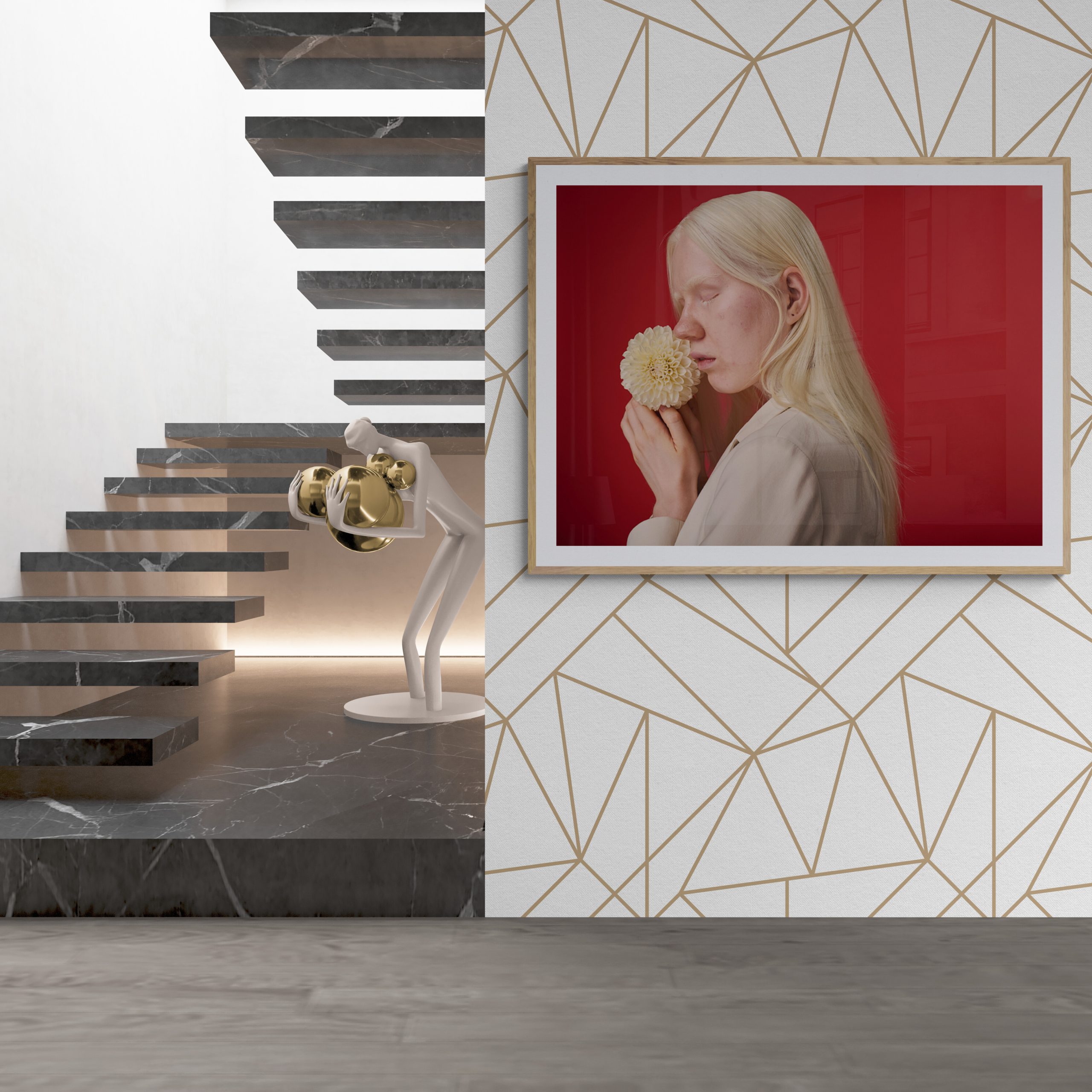
How to Choose Art for Your Home: A Guide to Curating Your Space
How to Choose Art for Your Home: A Guide to Curating Your Space
A practical, personal guide to choosing work you want to live with — from first attraction and scale to light, framing and the slow work of building a collection.
A home becomes memorable when it contains decisions that could only have been made by the people who live there. Art is one of the clearest of those decisions. It can hold a private memory, introduce an unfamiliar point of view, alter the rhythm of a room or simply make you stop for a second every time you pass it. The aim is not to find an object that obediently matches the furniture. It is to find work with which you can build a relationship.
This guide offers a practical way to make that relationship possible. You do not need a degree in art history, an empty white wall or a large budget. You need attention, accurate measurements and permission to trust your response.
Begin with attention, not decoration
Before asking where a work will go, notice what keeps your attention. Save images for a few weeks without trying to make them coherent. Look at paintings, photography, drawing, sculpture, textile, editions and digital work. When you review the group, patterns usually emerge: perhaps you return to intense colour, quiet portraits, bodily forms, precise geometry or images that feel politically charged.
The useful question is not “Does this fit my style?” but “What is happening between me and this work?” Attraction can be immediate, but it can also contain discomfort, curiosity or ambiguity. A work that continues to unfold often gives more over time than one that is instantly easy to explain.
Choose the work you want to keep looking at, not the work that disappears politely into the room.
Read the room before choosing the scale
Measure the available wall and the furniture below it. For a work above a sofa, console or bed, a useful starting point is a width around two-thirds of the furniture, but this is not a law. One small work surrounded by generous empty space can feel intentional; several small works can create a visual field; an oversized piece can reorganise the entire room.
Make a paper template in the exact dimensions of the work and tape it to the wall with low-tack tape. Live with the outline for a day. View it while standing, sitting and entering the room. This simple test reveals problems that a phone mock-up misses: a door swing, a reflection, a lamp interrupting the view or a composition that feels too high.
Work with light, not against it
Natural light changes throughout the day. Direct sun can fade works on paper, photographs, textiles and some pigments, while glossy glazing can become a mirror opposite a window. Observe the wall in the morning, afternoon and evening. If the location receives strong sunlight, consider UV-filtering glazing, a different wall or a rotational display in which sensitive work is not permanently exposed.
At night, use a warm, diffused source with good colour rendering. The light should reveal the work without creating a theatrical spotlight unless that is a deliberate effect. Sculpture needs particular attention: a small shift in the direction of light can completely change its volume and shadow.
Let colour create a relationship
A room does not need a work that repeats its existing palette. A green painting can intensify a red detail elsewhere; a monochrome photograph can slow down a colourful room; a pale drawing can create quiet inside a visually busy space. Think in terms of relationships — echo, contrast, interruption and rhythm — rather than exact matching.
If you are uncertain, identify the strongest colour already in the room and decide whether the artwork should amplify it or provide relief. Both approaches can work. What usually feels flat is choosing colour without considering the emotional temperature of the work itself.
Understand material and care
Ask what the work is made from, whether it is unique or part of an edition, how it should be handled and whether it arrives framed. Works on paper may need acid-free mounting; unglazed paintings should not be touched or placed above steam and heat; photographs require information about the print process and edition; sculpture may need a stable plinth or discreet fixing.
These questions are not administrative details. Material is part of meaning. A fragile surface, a hand-built frame or a particular printing process can change how you understand the work and how it should live in your home.
Frame to support the work
A frame is a transition between artwork and architecture. It should protect the object and clarify its presence. Slim black or pale timber frames are versatile, but they are not neutral in every situation. A coloured frame can extend the logic of the work; a float mount can reveal the edges of paper; museum glass can reduce reflections where detailed viewing matters.
Ask the artist whether a specific presentation is integral to the work. If the work is unframed, use a framer who understands archival materials. Avoid permanently trimming paper or attaching work with irreversible adhesives simply to fit a standard frame.
Set a budget that includes the whole decision
Your budget should include framing, delivery, installation and possible insurance, not only the listed price. An original work may be within reach once payment is planned; an edition or smaller work can offer a meaningful entry point without being a lesser choice. Buying slowly is often better than filling every wall at once.
Do not treat an artwork as a guaranteed financial investment. Its value can be cultural, emotional and intellectual long before it is monetary. Ask for an invoice, artist details, title, year, medium, dimensions and edition information, and keep those records safely.
Build conversations across the home
A collection does not need one visual theme. It needs relationships. Put a quiet photograph near an expressive painting and notice how each changes. Bring a sculpture into dialogue with a shadow or a view. Repeat a colour across rooms. Move work periodically: familiarity can make even a loved piece invisible, while a new location restores attention.
When displaying queer art, context matters. Learn about the artist and the project rather than reducing the work to identity alone. Share the artist’s name when guests ask. If an image carries intimacy or political history, allow it to remain complex rather than turning it into a decorative symbol.
A final checklist before you decide
- Would you still want to live with the work if the room changed?
- Have you confirmed dimensions, medium, edition and condition?
- Have you checked the wall in changing daylight?
- Do you understand framing, delivery and installation costs?
- Can you name what keeps drawing you back?
You do not need complete certainty. The most rewarding collections often begin with one work that feels slightly braver than the room around it. Give yourself time, ask direct questions and choose with curiosity. You can browse the Queer Art collection or request personalised help through our art advisory service.
Continue reading
More from the journal.

Queer Culture · 10 min read
Beyond Visibility: Why Queer Art Needs Context, Not Just Exposure

Artist Practice · 11 min read
How to Build an Artist Portfolio That Tells a Clear Story

Guides · 12 min read
How to Photograph Artwork for an Online Portfolio
Queer Art is built around artists, context and sustained attention.
Discover our artists