No products in the cart.
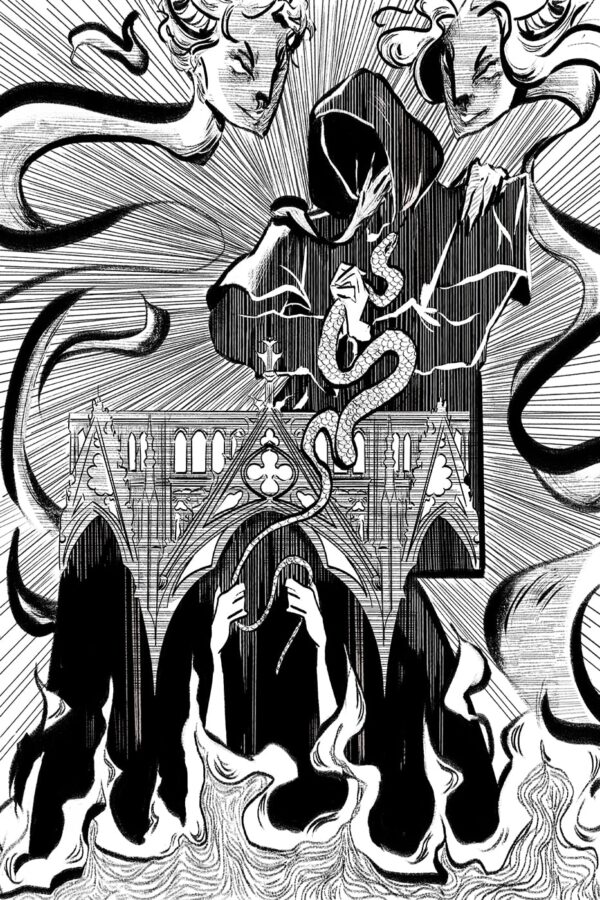
Temptations of the Snake
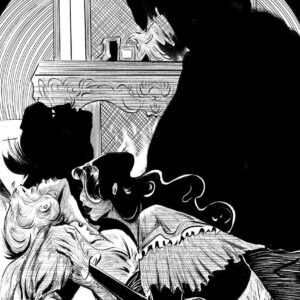
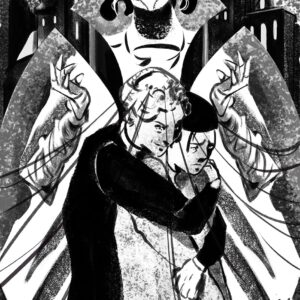
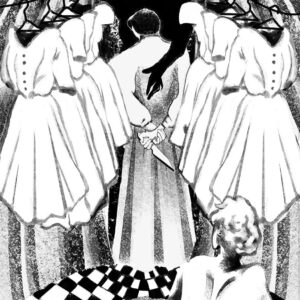
Temptations of the Snake draws inspiration from Matthew Lewis’s The Monk (1796) to examine queer horror through the lens of repression, desire, and moral panic. In this dramatic black-and-white digital illustration, Albaraciii stages a symbolic confrontation between religious devotion and forbidden attraction. The monk Ambrosio is placed at the center of a scene of temptation and corruption, while serpentine imagery and demonic figures amplify the tension between spiritual order and repressed desire.
The work reflects on how queer desire was often displaced, hidden, or demonised within Gothic literature. Ambrosio’s attraction to the novice Rosario — later revealed to be Matilda in disguise, and ultimately a demonic presence — becomes a visual metaphor for the fear surrounding bisexuality, fluid desire, and gender ambiguity. Albaraciii transforms this literary moment into a critique of the historical persecution of queer people, showing how non-normative desire was framed not only as sinful, but as monstrous. Through sharp contrast, stylised composition, and religious symbolism, the piece reclaims that visual tradition and turns it into a powerful reflection on repression and queer visibility.